Placeholder — written to give the publication structure before launch. This is not reporting and the figures in it are illustrative. It must be replaced with commissioned analysis before Cameroon Business Review goes live.
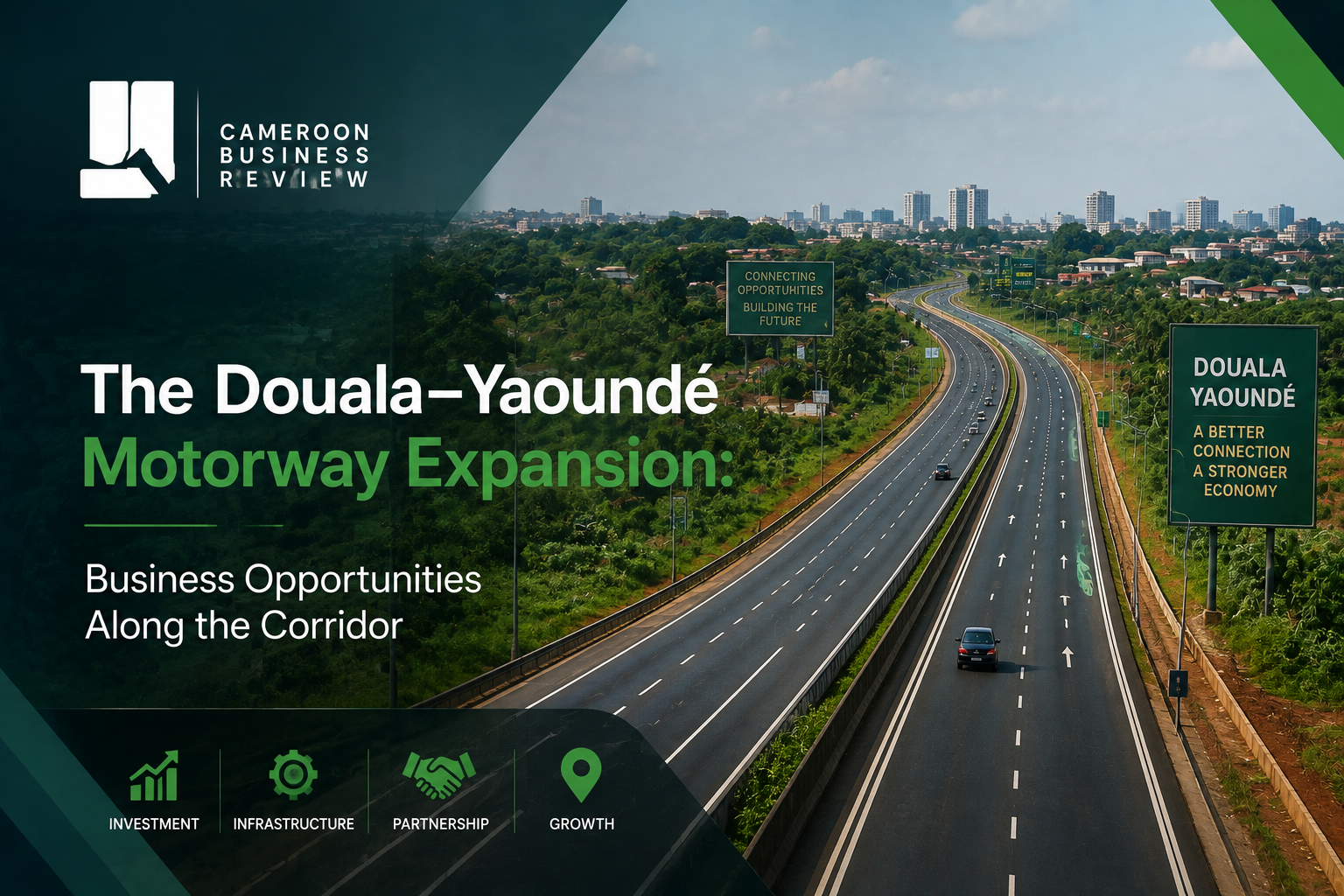
The road between Cameroon's commercial capital and its political one carries the bulk of domestic freight, and it has been a bottleneck for as long as anyone in logistics can remember. The motorway programme is the most consequential infrastructure project in the country for the operating cost of ordinary businesses.
Freight economics change first
A meaningful cut in transit time changes the viable radius for perishable goods, the number of rotations a haulier can run per week, and the inventory a distributor has to hold. Each of those is a margin improvement that arrives without anyone changing their product.
What tends to follow a corridor
Warehousing and cold storage at the ends, fuel and service businesses at the interchanges, and land values along the route repricing well before the road opens. The land repricing is usually the earliest and least evenly distributed effect.
The caution
Phased infrastructure delivers benefits in phases, and completion dates in the region move. Business cases built on the full corridor opening to schedule have a history of disappointing. Model the partial case.