
Cameroon Banking Sector in 2026: Trends, Outlook and Opportunities for Businesses
Introduction
The banking sector is a cornerstone of Cameroon’s economy, supporting businesses, entrepreneurs, households, and public institutions through access to financial services. As the country continues to modernize its economy and strengthen regional integration within the Central African Economic and Monetary Community (CEMAC), the financial sector is evolving to meet new demands.
Banks are no longer limited to traditional services such as deposits and loans. Today, they are investing in digital transformation, expanding financial inclusion, improving customer experiences, and developing innovative products for businesses of all sizes. At the same time, regulators are reinforcing financial stability while encouraging responsible lending and technological innovation.
For business owners, investors, and decision-makers, understanding these developments is essential. Banking trends influence access to capital, payment systems, trade financing, investment opportunities, and the overall ease of doing business.
This article explores the current state of the Cameroon banking sector, the major trends shaping the industry in 2026, key challenges, emerging opportunities, and what businesses should watch moving forward.
The Current State of Cameroon’s Banking Sector
Cameroon has one of the largest and most diversified banking industries in Central Africa. The sector comprises commercial banks, microfinance institutions, insurance companies, investment firms, and emerging fintech providers, all operating within the regulatory framework of the Bank of Central African States (BEAC) and the Central African Banking Commission (COBAC).
The sector plays several critical roles in the economy:
Financing businesses and industrial growth
Supporting domestic and international trade
Facilitating savings and investments
Promoting financial inclusion
Enabling digital payment systems
Providing credit to households and enterprises
As sectors such as agriculture, manufacturing, construction, logistics, telecommunications, and services continue to grow, demand for efficient and accessible banking services is expected to increase.
Key Trends Shaping the Cameroon Banking Sector in 2026
1. Digital Banking Is Becoming the New Standard
Digital transformation is one of the most significant changes occurring within Cameroon’s banking industry. Customers increasingly expect convenient, secure, and accessible banking services without the need to visit a physical branch.
Banks are investing in digital solutions such as:
Mobile banking applications
Internet banking platforms
Instant fund transfers
Online account opening
Digital loan applications
Electronic statements and notifications
For businesses, these innovations translate into faster transactions, improved cash flow management, and reduced administrative costs. Digital banking is no longer viewed as an added convenience—it has become a strategic necessity for financial institutions seeking to remain competitive.
2. Mobile Money Continues to Influence Financial Services
Mobile money has transformed the way individuals and businesses conduct financial transactions across Cameroon. It has significantly expanded access to financial services, particularly for people who previously had limited access to traditional banking.
Today, mobile wallets are commonly used to:
Receive and send money
Pay utility bills
Purchase goods and services
Pay school fees
Receive salaries
Conduct small business transactions
Recognizing this shift, many banks are integrating their services with mobile money platforms to offer customers greater flexibility and convenience. This collaboration between banks and fintech providers is strengthening the country's digital financial ecosystem.
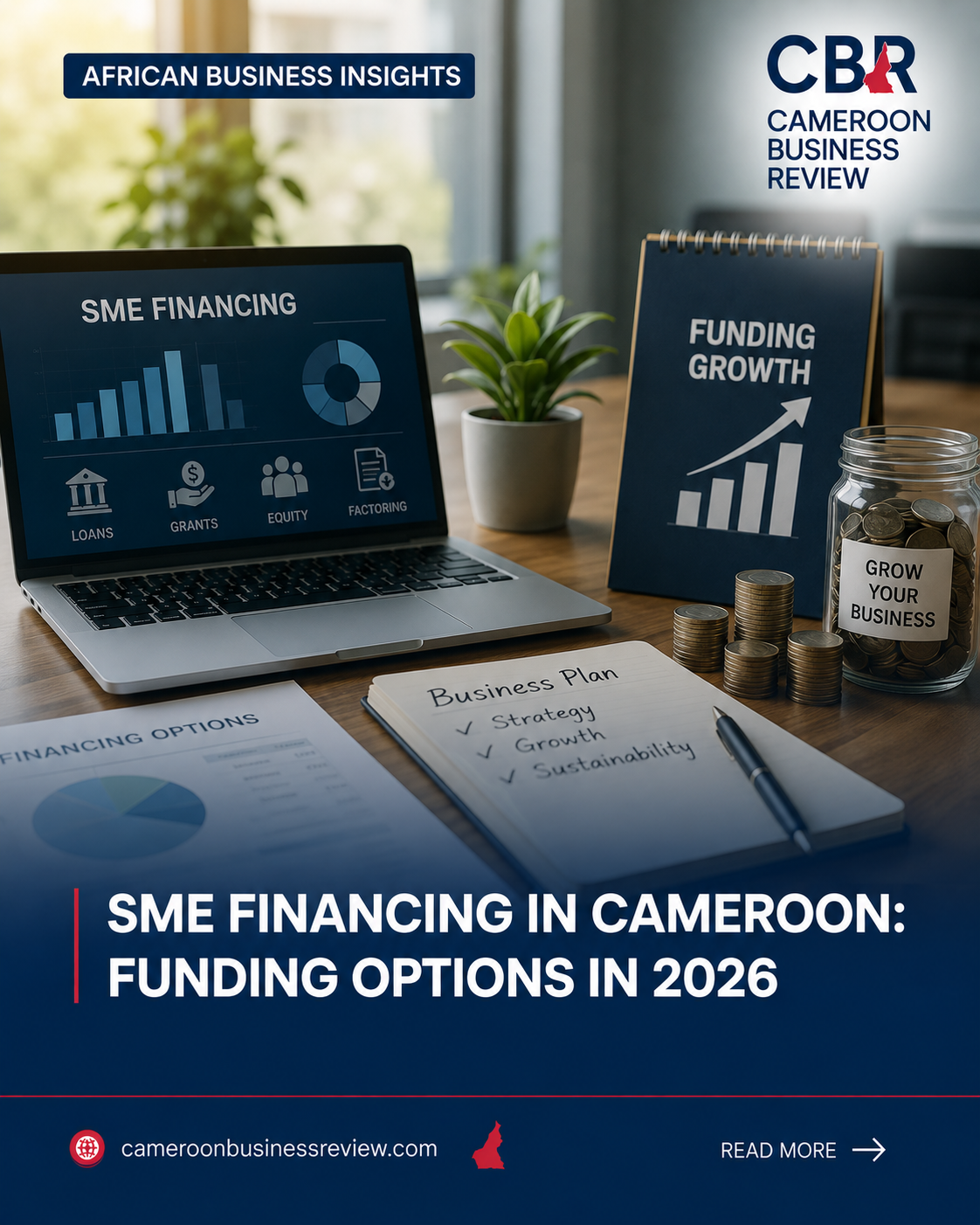
3. Greater Focus on SME Financing
Small and medium-sized enterprises (SMEs) contribute significantly to employment, innovation, and economic growth in Cameroon. However, access to affordable financing remains one of the biggest challenges facing entrepreneurs.
To address this gap, several financial institutions are introducing products tailored to SMEs, including:
Working capital loans
Equipment financing
Agricultural credit facilities
Trade finance
Invoice financing
Business advisory services
Although obtaining financing often requires detailed financial records and collateral, banks are gradually adopting more flexible approaches to better support business growth.
4. Strengthening Financial Regulation
The stability of Cameroon’s banking sector relies heavily on effective regulation. BEAC and COBAC continue to implement policies designed to enhance transparency, strengthen financial resilience, and protect consumers.
Current regulatory priorities include:
Strengthening capital adequacy requirements
Enhancing risk management frameworks
Combating money laundering and financial crimes
Improving cybersecurity standards
Promoting responsible lending practices
Protecting customer deposits
These measures aim to build confidence in the financial system while supporting sustainable economic growth.
Opportunities for Businesses
Improved Access to Digital Financial Services
Businesses are increasingly benefiting from modern banking technologies that simplify financial management.
Advantages include:
Faster payments and settlements
Better financial record-keeping
Improved payroll management
Easier tax compliance
Reduced dependence on cash
These tools can improve operational efficiency and support long-term business growth.
Access to Business Financing
Companies with well-structured operations and reliable financial records are better positioned to secure funding for expansion.
Common financing options include:
Business loans
Asset financing
Equipment leasing
Trade finance
Import and export financing
Overdraft facilities
Preparing a strong business plan and maintaining transparent financial records remain essential when seeking financing.
Regional Trade Opportunities
As a member of CEMAC, Cameroon serves as an important gateway for regional trade.
Banks support businesses engaged in cross-border commerce through services such as:
Foreign exchange transactions
Trade finance
International payments
Letters of credit
Cross-border banking services
Growing regional integration presents new opportunities for exporters, importers, and investors looking to expand across Central Africa.
Challenges Facing the Banking Industry
Despite encouraging progress, several challenges continue to affect the banking landscape.
Limited Financial Inclusion
Many rural communities still have limited access to formal banking services. Expanding digital infrastructure and improving financial literacy remain essential for increasing financial inclusion.
High Lending Requirements
Many SMEs face difficulties obtaining financing due to:
Insufficient collateral
Limited credit history
Informal business structures
Weak financial documentation
Addressing these barriers will be important for unlocking the full potential of the country's entrepreneurial sector.
Cybersecurity Risks
As financial services become increasingly digital, protecting customer information has become more critical than ever.
Banks continue investing in:
Fraud detection systems
Multi-factor authentication
Secure payment platforms
Customer awareness campaigns
Advanced cybersecurity infrastructure
Maintaining public trust will remain essential as digital banking adoption continues to grow.
What Businesses Should Watch in 2026
Business leaders should closely monitor several developments that could influence financing and investment decisions.
These include:
Expansion of digital banking services
Growth of fintech partnerships
Changes in BEAC monetary policy
New SME financing initiatives
Regional payment integration within CEMAC
Advances in cybersecurity regulations
Increasing adoption of cashless payment solutions
Remaining informed about these trends can help businesses make smarter financial decisions and identify new growth opportunities.
Outlook for the Cameroon Banking Sector
The future of Cameroon’s banking industry is expected to be driven by innovation, collaboration, and greater financial inclusion. Banks that successfully combine digital transformation with customer-focused services are likely to strengthen their competitive position.
Emerging areas expected to shape the sector include:
Artificial intelligence in banking
Open banking initiatives
Green and sustainable finance
Digital lending platforms
Enhanced customer experience
Data-driven financial services
Regional financial integration
While challenges such as credit accessibility and cybersecurity remain, the long-term outlook for the industry remains positive.
Why This Matters for Investors and Entrepreneurs
A strong banking sector supports economic development by facilitating investment, encouraging entrepreneurship, and improving access to capital. Businesses that understand evolving financial trends are better equipped to adapt to changing market conditions and capitalize on new opportunities.
Whether launching a startup, expanding operations, or entering the Cameroonian market, staying informed about developments within the banking sector can provide a valuable competitive advantage.
Conclusion
The Cameroon banking sector is undergoing a significant transformation, driven by digital innovation, evolving customer expectations, stronger regulatory oversight, and expanding opportunities for businesses. Financial institutions are modernizing their services while supporting greater financial inclusion and regional economic integration.
Although challenges remain, particularly in SME financing and cybersecurity, the sector's trajectory points toward a more connected, resilient, and technology-driven financial ecosystem. Businesses and investors who stay informed and embrace these changes will be better positioned to thrive in Cameroon’s evolving economy.
Key Takeaways
Cameroon’s banking sector continues to modernize through digital transformation.
Mobile money is reshaping financial services and increasing financial inclusion.
SME financing remains a strategic priority for many financial institutions.
Stronger regulation is improving financial stability and consumer confidence.
Regional integration within CEMAC is creating new opportunities for trade and investment.
Businesses that leverage digital financial tools can improve efficiency and competitiveness.
Call to Action
Looking for trusted insights on Cameroon’s business landscape?
Subscribe to Cameroon Business Review for expert analysis, market intelligence, and in-depth coverage of banking, finance, trade, investment, and the wider CEMAC economy. Stay informed, make smarter decisions, and gain a competitive edge in one of Central Africa’s most dynamic markets.
Frequently Asked Questions (FAQs)
What is the outlook for Cameroon’s banking sector in 2026?
The sector is expected to experience continued growth driven by digital banking, financial inclusion initiatives, fintech partnerships, and stronger regulatory oversight.
How are banks supporting SMEs in Cameroon?
Many banks are introducing specialized loan products, trade finance solutions, equipment financing, and advisory services tailored to small and medium-sized enterprises.
Why is digital banking important for businesses?
Digital banking enables faster transactions, improved cash flow management, reduced operational costs, and greater convenience for both businesses and their customers.
What role does CEMAC play in Cameroon’s banking sector?
As part of CEMAC, Cameroon benefits from regional monetary cooperation, harmonized banking regulations, and improved cross-border financial services that facilitate regional trade.