Cameroon's export revenue fell by CFA187.1 billion in the first quarter of 2026, from CFA794 billion a year earlier to CFA606.9 billion, according to the National Economic and Financial Committee (CNEF). That is a drop of 23.6%, and three commodities explain most of it: cocoa, crude oil and liquefied natural gas. Together they account for about 91% of the contraction.
Cocoa took the biggest hit
Cocoa and cocoa products earned CFA199.3 billion between January and March, against CFA319.9 billion a year earlier, a fall of CFA120.6 billion or 37.7%. The World Bank benchmark price fell from $8.08 per kilogram in March 2025 to $3.24 in March 2026. Price, rather than volume alone, is the story.
Oil and gas fell even as global prices rose
Crude oil export revenue fell 14.4% to CFA152.4 billion and LNG fell 28.4% to CFA59.9 billion, despite significantly higher global oil and gas prices. Lower volumes are part of the explanation. The CNEF expects LNG exports to drop further after the Hilli Episeyo floating LNG vessel left Cameroon in July 2026. LNG earned CFA350.2 billion in 2025, down from CFA381 billion in 2024, CFA421 billion in 2023 and a peak of CFA622 billion in 2022. The CNEF projects growth slowing to 3.2% in 2026.
Other exports also weakened in the quarter: aluminium and aluminium products fell 53.7%, raw rubber 16.7%, and wood and wood products 11.5%.
Where there was growth
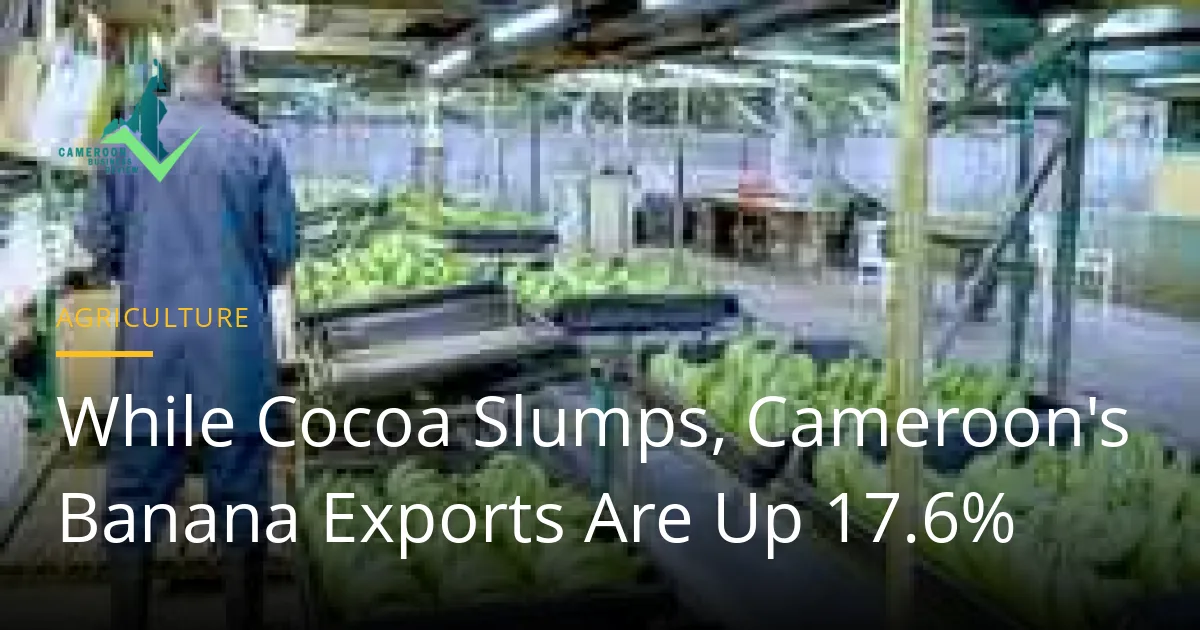
Not everything went down. Cotton exports rose 57.5% to CFA21.1 billion, bananas and plantains rose 27.9%, and household soap exports increased 16.8%. These are small against the lost cocoa and hydrocarbon revenue, but they show where diversification is already happening.
Imports fell faster
Imports dropped 16.2%, from CFA1,464.4 billion to CFA1,226.5 billion, a fall of CFA237.9 billion. That was larger than the export decline, so the quarterly trade deficit narrowed from about CFA670 billion to about CFA620 billion. It is a smaller gap, but the reason is that the country bought less, not that it sold more. The CNEF linked the quarter to a worsening global environment, citing a new conflict in the Middle East from late February 2026, the closure of the Strait of Hormuz and disruption to energy markets.
What to watch
Cameroon earns much of its foreign currency from a handful of raw commodities, and the first quarter showed how quickly that can turn when prices move. For businesses, the lesson is practical: importers should watch foreign-exchange availability, and exporters outside cocoa and oil, in cotton, bananas and processed goods, are where the figures are currently moving upward. The next CNEF update will show whether the first-quarter drop was a bad quarter or the start of a trend.