Cameroon’s CFAF370bn Investment Pipeline: Why Manufacturing Is Moving Up
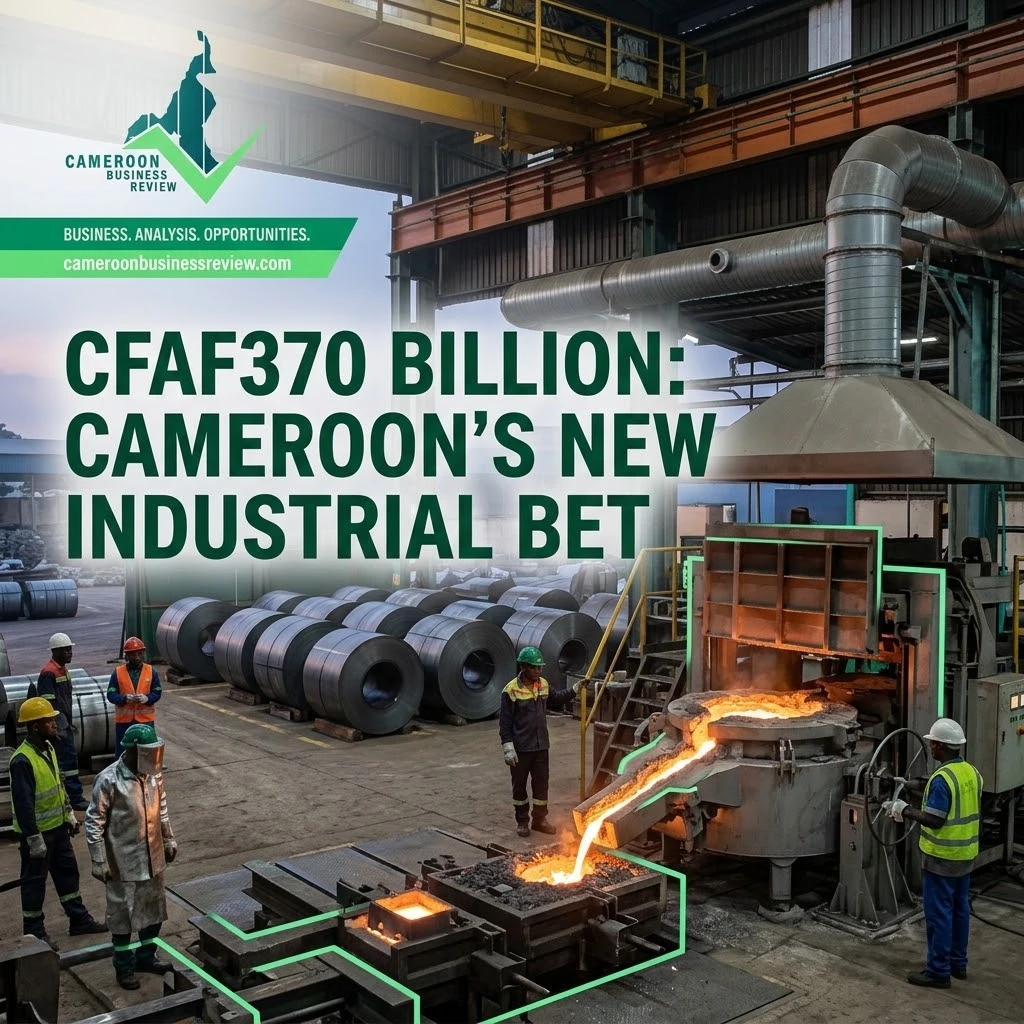
Cameroon has added another large block of private investment to its project pipeline, with six agreements signed by the Investment Promotion Agency (IPA) covering planned investments of CFAF370.3 billion.
The figure is striking, but the composition of the projects is even more important.
More than 95% of the proposed capital is linked to metallurgy, according to information released by the IPA in September. Three metallurgy projects alone account for CFAF353.5 billion and are expected to generate 12,850 jobs. Across all six projects, projected employment stands at 14,267 jobs.
The largest project is planned by Cameroon Steel Manufacturing Company, with an investment of CFAF247.5 billion and nearly 8,500 projected jobs.
That puts manufacturing and industrial processing at the centre of this latest investment cycle.
Why the numbers matter
Cameroon has spent years trying to move beyond an economy heavily dependent on commodities and imported manufactured goods.
The investment agreements suggest that industrial production remains one of the main channels through which the country hopes to achieve that shift.
Steel and metallurgy have a particular importance because they can feed several parts of the domestic economy.
Construction companies need steel. Infrastructure projects require metal products. Manufacturers need industrial inputs. Packaging, machinery and engineering businesses also depend on a wider industrial ecosystem.
A large steel operation therefore has potential effects beyond the factory itself.
The real economic question, however, is how much of that wider ecosystem will develop locally.
If industrial projects import most of their machinery, technical services and intermediate inputs, the domestic economic effect will be more limited than the headline investment figure suggests.
If they create local supplier networks, technical jobs, logistics demand and downstream manufacturing, the impact can be much broader.
From investment agreements to factories
There is an important distinction between an investment agreement and an operational investment.
The CFAF370.3 billion represents planned investment, not money already deployed or factories already producing.
That distinction matters for investors, policymakers and businesses watching Cameroon’s industrial pipeline.
The next milestones will include financing, land and infrastructure, equipment procurement, construction, recruitment and eventually production.
The ability to move projects through those stages will determine how much of the announced investment becomes visible in the real economy.
Cameroon has already been using investment agreements and incentives to attract private capital. The challenge is turning those agreements into operating assets.
Metallurgy and the broader industrial chain
The concentration of capital in metallurgy also reflects a wider trend in Cameroon’s industrial ambitions.
The country is developing mining projects while simultaneously seeking greater domestic processing.
This creates a potential connection between mining and manufacturing.
Instead of exporting minerals in relatively unprocessed form, the longer-term opportunity is to build processing and manufacturing capacity around those resources.
That could create demand for:
engineering services;
industrial maintenance;
transport and logistics;
energy;
construction;
equipment suppliers;
financial services;
professional services;
technical training.
This is where the investment story becomes more interesting for local businesses.
The biggest opportunity may not always be owning the headline industrial project. It can be supplying the companies building and operating it.
The infrastructure question
Industrial investment cannot operate in isolation.
Large factories need reliable electricity, transport connections, water, telecommunications and efficient customs processes.
This is particularly important for metallurgy because production is energy-intensive and logistics can significantly influence production costs.
Cameroon is simultaneously pursuing investments in power generation, ports, roads and industrial zones.
The development of the Kribi industrial ecosystem, for example, is designed to bring processing closer to port infrastructure and increase local value addition. The Kribi Port Industrial Zone project has been estimated at more than €795 million.
That creates an interesting connection between industrial investment and logistics.
What businesses should watch
For entrepreneurs and investors, the next question is not simply how much Cameroon is attracting.
It is where the money is going and what businesses will be needed around it.
Industrial projects create opportunities for companies that can provide:
equipment maintenance;
industrial safety;
transportation;
warehousing;
recruitment;
accounting and auditing;
cybersecurity;
software;
construction;
catering;
professional training.
The supplier ecosystem can sometimes become a significant business opportunity in its own right.
Final Thoughts
Cameroon’s CFAF370.3 billion investment pipeline provides another indication that industrialisation remains central to the country's economic strategy.
But the headline number should be treated as a pipeline rather than completed investment.
The more important story will unfold when these projects secure financing, begin construction, start production and connect with local suppliers.
For Cameroon, the real value of industrial investment will ultimately be measured not only in capital committed, but in factories operating, products made locally, businesses created and value retained inside the economy.