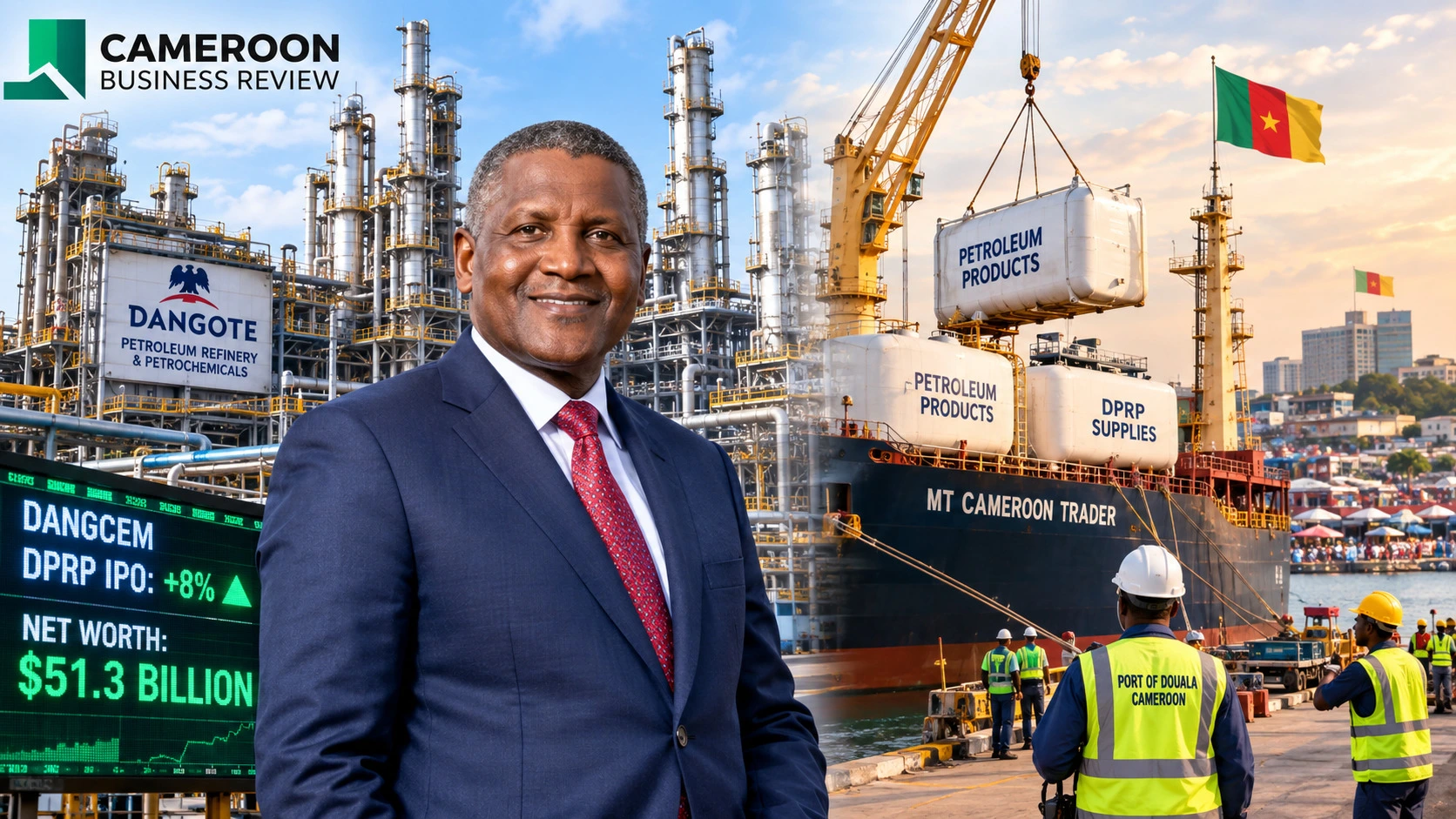
African industrialist Aliko Dangote experienced a major surge in his personal fortune on September 14, 2026, when Forbes valued his net worth at $51.3 billion. The valuation increase coincided with the official opening of the initial public offering (IPO) for the Dangote Petroleum Refinery and Petrochemicals (DPRP) on the Nigerian Exchange (NGX).
The Historic IPO Offering
The share sale marks one of the largest public offerings in African corporate history. The Securities and Exchange Commission cleared the company to offer 4.1 billion ordinary shares priced at N525 each, targeting a total raise of N2.15 trillion (approximately $1.6 billion). The subscription period opened on September 14 and is scheduled to run through October 13, 2026.
Proceeds from the public offering will fund an ambitious expansion plan to increase the refinery's nameplate refining capacity from 650,000 barrels per day to 1.4 million barrels per day.
Broader Economic Impact on Cameroonians
While the initial public offering opened on the Nigerian Exchange, the development carries significant implications for business operators and consumers across the CEMAC zone, particularly in Cameroon:
- Refined Petroleum Supply Security: Cameroon relies heavily on imported refined petroleum products due to capacity constraints at local facilities. The expansion of the mega-refinery near Lagos offers a closer regional source for refined fuels, potentially reducing supply chain disruption risks and freight costs.
- Cross-Border Trade and Cross-Listing Potential: Although initial subscription access focuses on Nigerian retail and institutional investors, project advisers are exploring regional links with other African stock exchanges to widen investor participation.
- Petrochemical Inputs for Local Industry: Increased production capacity for polypropylene and other petrochemical derivatives provides Cameroonian manufacturing and packaging sectors access to input materials within the West and Central African trading corridor.